
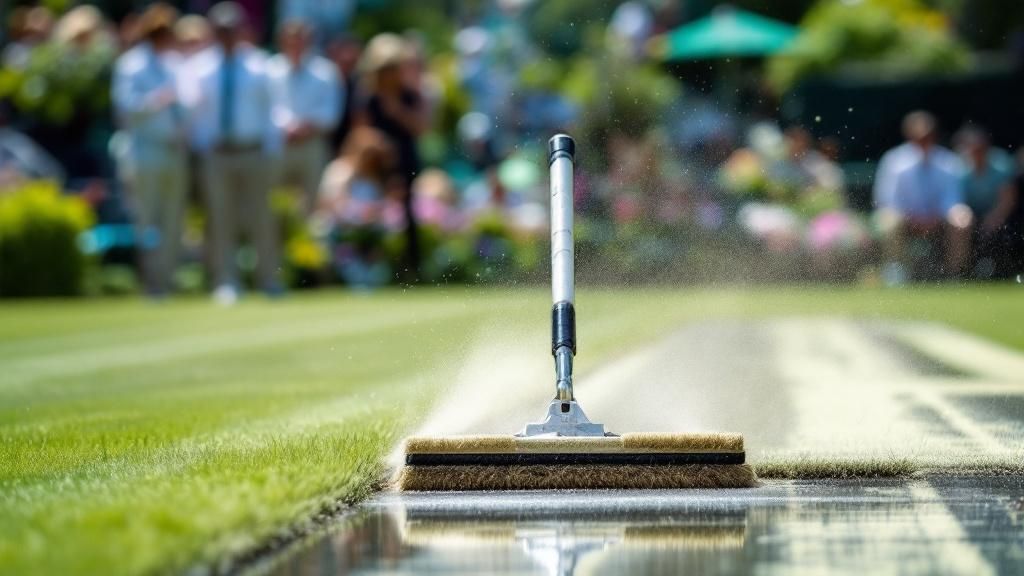
For more than a century, Wimbledon’s pristine grass courts have captivated tennis enthusiasts worldwide, yet the careful preparation techniques remain mostly shrouded in mystery. Now, the tournament’s dedicated groundskeeping team has unveiled the intricate techniques and rigorous protocols that convert the All England Club’s courts into the sport’s most prestigious playing surface. From specialist seed selection to exact cutting schedules, discover the backstage expertise that ensures Wimbledon’s courts preserve their iconic status year after year.
The Research Behind Wimbledon’s Legendary Courts
Wimbledon’s grass courts embody a fascinating blend of horticultural science and sporting excellence. The All England Club’s turf management specialists employs advanced horticultural expertise to maintain the optimal grass surface, precisely identifying grass types that offer excellent wear resistance and performance. The courts’ unique visual character and outstanding court quality result from extensive historical experience, paired with state-of-the-art turf care equipment. Each blade of grass is monitored and maintained to precise requirements, maintaining consistency across all playing courts and providing the equal competitive conditions that professional athletes expect.
The readiness procedures begins several months prior to the tournament commences, with groundskeepers executing comprehensive maintenance schedules that tackle soil composition, drainage systems, and grass health. Sophisticated data analysis and precision equipment allow the team to assess moisture levels, grass density, and surface firmness with remarkable accuracy. This data-driven method guarantees that Wimbledon’s courts remain unparalleled in the professional tennis calendar, providing players with predictable bounce characteristics and reliable playing conditions. The groundskeeping staff’s commitment to quality has positioned Wimbledon as the gold standard for grass court preparation across the sporting world.
Ongoing Maintenance and Growing Methods
The All England Club’s turf maintenance crew operates a comprehensive year-round upkeep schedule that goes well past the two-week championship. Beginning in autumn, the team carries out strategic renovation procedures, including scarification and aeration, to remove thatch and improve soil drainage. Winter months emphasise careful monitoring and protective measures, whilst the spring brings intensive fertilisation and overseeding schedules. This cyclical approach ensures the grass remains robust and resilient across the year.
Precision cutting constitutes a cornerstone of Wimbledon’s grass maintenance approach, with the courts maintained at a carefully monitored height of precisely 8 millimetres during match competition. The grounds team use specialist cylindrical mowers and cutting equipment, calibrated to exacting standards, to achieve this evenness across all courts. Regular rolling and brushing treatments further refine the playing surface, whilst focused pest control and disease control measures safeguard the turf’s health and longevity throughout the year.
Tournament Readiness Planning and Optimisation
In the closing weeks before the tournament, Wimbledon’s turf management team increases their efforts to achieve tournament-grade surfaces. The courts receive careful daily inspections, with specialists measuring grass density, moisture levels, and court hardness. Precision cutting is carried out at exacting heights, whilst nutrient application plans ensure ideal nutrient uptake. This intensive preparation period represents the conclusion of months of committed work, converting already exceptional courts into the immaculate surfaces that characterise Wimbledon’s internationally acclaimed prestige.
Weather tracking becomes essential during this critical period, as the team adjusts irrigation programmes to cater to seasonal precipitation trends and temperature fluctuations. Specialised tools, such as advanced soil testing equipment and precision laser levelling apparatus, enables groundskeepers to identify even slight surface imperfections. Each court gets bespoke care, with particular focus on baseline sections and net areas that undergo the most intensive player contact. This bespoke approach delivers consistent playing conditions across all tournament courts.
The final week prior to play starts involves extensive assessment procedures, such as ball bounce assessments and grip analysis. Tournament officials collaborate with the grounds crew to verify that playing surface requirements meet strict global regulations. These rigorous quality assurance procedures ensure that every participant competing at Wimbledon receives the same outstanding playing conditions, upholding the championship’s distinguished reputation and competitive integrity.
